
I've been in construction tech for six years now, and I'm tired of the AI hype cycle. Everyone's claiming their product has AI, but most of it is just glorified Excel macros. So let me tell you what's actually working in procurement AI - no BS.
Invoice matching is genuinely impressive
We trained our models on thousands of invoices with all their weird formatting quirks. The system now catches mismatches at 95%+ accuracy, even when vendors write "quantity: 100" one month and "qty: 100" the next. Our customers are saving 10-15 hours per week just on AP work.
The breakthrough wasn't the technology itself - it was understanding that construction vendors are chaotic with formatting, and the AI needed to handle that chaos.
RFQ pre-fill sounds boring but saves real time
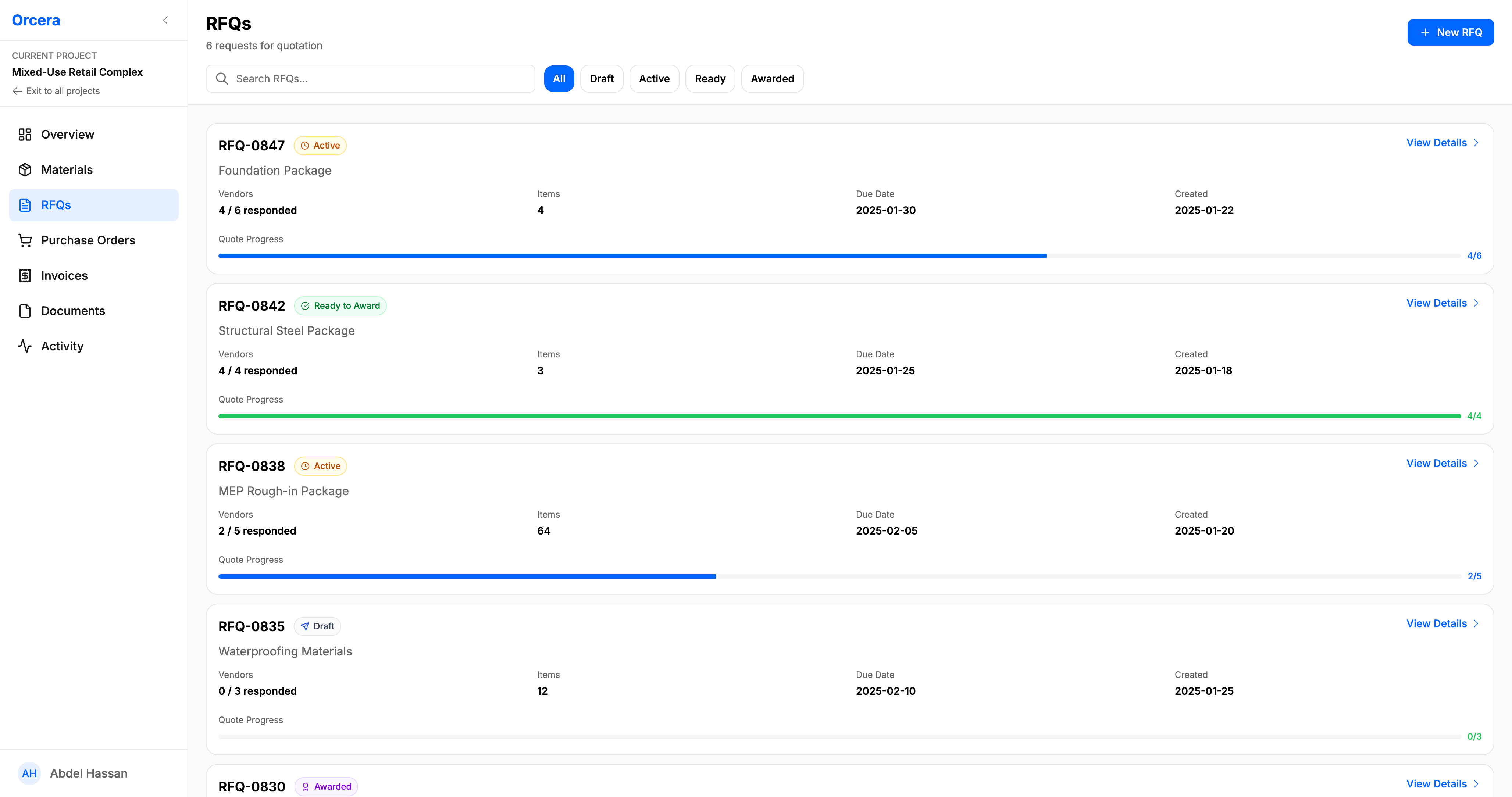
Nobody gets excited about auto-fill features. But when you're creating your 50th RFQ for lumber this quarter, you really appreciate a system that remembers your specs, typical quantities, and which vendors you usually send it to.
We've seen RFQ creation time drop from 20 minutes to 3 minutes. That's not revolutionary technology - it's just good pattern recognition applied to a repetitive task.
Automated vendor selection? Not happening
I really thought we could build an AI that picks the right vendor automatically. We tried. It failed.
Turns out procurement decisions involve way too much context - relationship history, project urgency, quality concerns, payment terms, and plain old gut feeling. AI can surface recommendations, but the final call needs human judgment.
Anomaly detection is the unsung hero
The most valuable AI feature isn't flashy. It's the system that notices when something's off: an invoice 30% higher than usual, a vendor who normally responds in two days but hasn't replied in five, a quote that's suspiciously low.
Think of it as having a really detail-oriented assistant who never gets tired of checking things.
Where AI actually helps
Stop looking for AI that "automates everything." That's not happening anytime soon, and honestly, you don't want it to. Procurement requires relationships and judgment.
What you want is AI that handles the grunt work - data entry, format matching, pattern spotting - so your team can focus on strategy, negotiation, and building vendor relationships.
We're currently testing predictive pricing analytics. Early results suggest we can forecast material price increases 2-3 weeks out with decent accuracy. If it works at scale, it could help teams lock in pricing before spikes hit. But we'll see - I'm not making promises until it's proven in production.