
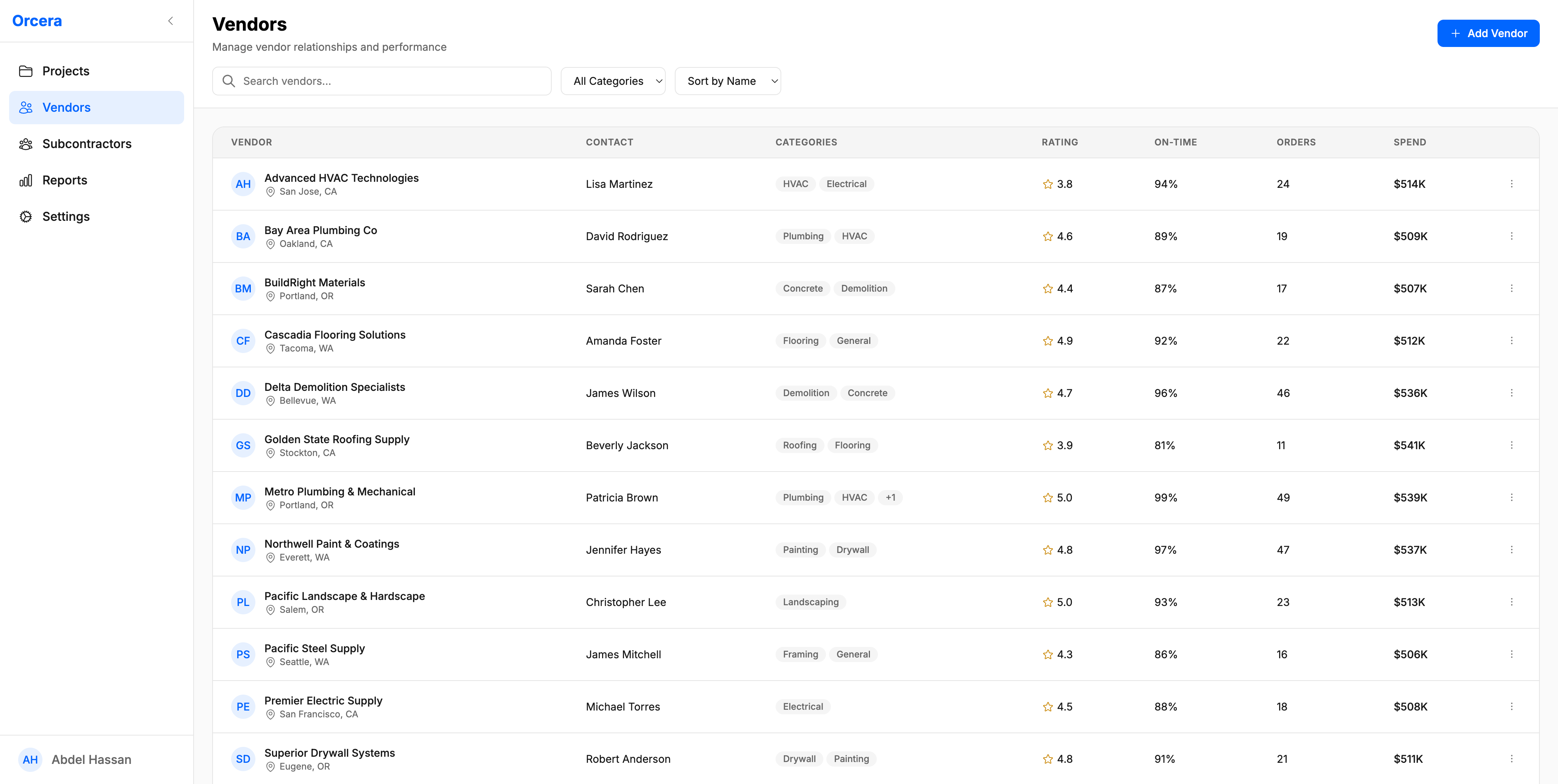

Most construction companies don't have a vendor management system. They have a list of phone numbers and a vague sense of who's reliable.
That works until it doesn't - usually when a critical vendor drops the ball mid-project or you realize you're paying 20% more than you should be.
Segment your vendors (yes, it matters)
Not all vendors deserve the same level of attention. Your strategic lumber supplier who you buy $500K/year from needs a different relationship than the specialty hardware guy you use once a quarter.
Break vendors into three groups: Strategic partners (10-15 vendors, high volume, get quarterly reviews), preferred vendors (30-40 vendors, regular usage, annual check-ins), and spot vendors (everyone else, manage transactionally).
The mistake most teams make is treating all 200 vendors the same. That's exhausting and ineffective.
Onboarding shouldn't be complicated
Create a simple form: insurance cert, W-9, payment terms, contact info for ordering/accounting/emergencies, quality expectations. Takes 10 minutes to fill out, saves hours of confusion later.
Half the vendor issues I see come from unclear expectations set during onboarding. Spend the 10 minutes upfront.
Track performance for vendors that matter
For strategic and preferred vendors, track four things: on-time delivery rate (shoot for 95%+), quality issues, RFQ response time, and pricing competitiveness.
You don't need complex software. A spreadsheet updated monthly is fine. The point is having objective data when performance discussions happen.
Quarterly reviews with strategic vendors build real partnerships
Review performance data, address concerns from both sides, discuss upcoming projects and volume forecasts, explore opportunities for better pricing or process improvements.
These meetings are where relationships deepen beyond transactional. Don't skip them because you're busy - they're what turn vendors into partners who prioritize your projects.
Know when to cut a vendor loose
First issue: document it, discuss directly. Second issue: formal warning with improvement plan. Third issue: move them to spot vendor status or remove entirely.
Loyalty is good, but not when it costs you project delays and budget overruns. Sometimes vendors just aren't a fit anymore.
Adding vendors creates hidden overhead
Every new vendor means onboarding paperwork, new relationships to manage, new payment terms to track, new quality standards to communicate. Before adding someone new, ask if an existing vendor can handle it.
Vendor consolidation isn't just about pricing leverage - it's about reducing complexity.
Good vendor management gets you better pricing through volume, priority treatment during material shortages, fewer emergency issues from consistent quality, and way less time spent firefighting vendor problems.
Don't try implementing this all at once. List your top 10 vendors by spend, set up basic tracking for those 10, schedule reviews with your top 3. Build from there.